
Melinda Gates’ Early Life: How Her Childhood Shaped Her Philanthropy
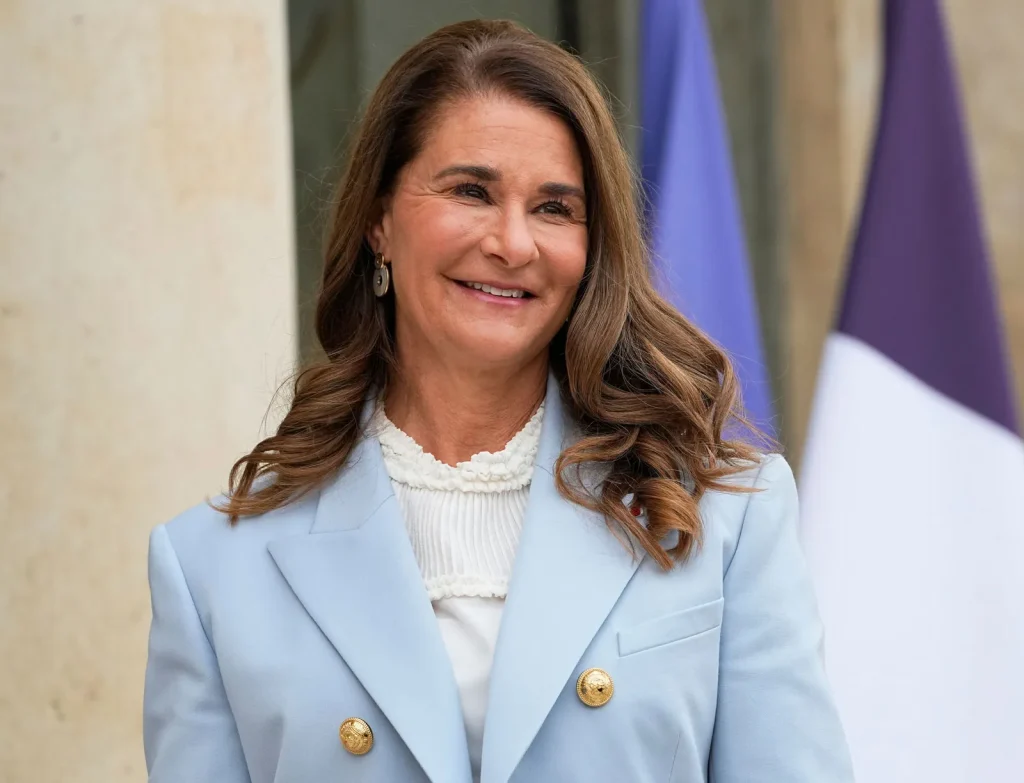
Melinda Gates is one of the most influential philanthropists of our time, with a legacy deeply intertwined with global health, women’s empowerment, and education. As co-chair of the Bill & Melinda Gates Foundation, her impact has been profound, but to fully appreciate the scope and depth of her contributions, it is essential to explore the Melinda Gates’ early life and the experiences that molded her into the philanthropic leader she is today. This article delves into Melinda Gates’ upbringing, highlighting how her childhood values, education, and early career experiences laid the foundation for her lifelong commitment to improving the world.
A Strong Family Foundation: Melinda Gates’ Early Life and Influences
Melinda Ann French was born on August 15, 1964, in Dallas, Texas, the second of four children. Her parents, Raymond Joseph French Jr., an aerospace engineer, and Elaine Agnes Amerland, a homemaker, were devoted to their children’s education and moral upbringing. The French family lived a modest, middle-class life, but they were rich in values that emphasized the importance of education, hard work, and community service.
Raymond and Elaine French were deeply committed to ensuring that their children received the best education possible, despite financial constraints. They saved diligently to send their children to Catholic schools, where they believed the combination of rigorous academics and strong moral teachings would provide the best foundation for their future success. This emphasis on education and moral responsibility would become a central theme in Melinda’s life and later inform her philanthropic endeavors.
Melinda’s parents were also active in their local community and church, setting an example of service and generosity. The French family regularly participated in volunteer activities, from helping out at local food banks to supporting their church’s charitable initiatives. These early experiences of giving back to the community were instrumental in shaping Melinda’s understanding of the importance of service and its impact on others.
In interviews, Melinda has often spoken about the influence of her parents on her values and outlook on life. “My parents taught us that we had a responsibility to help those less fortunate,” she once said. “They believed that everyone deserves a chance to succeed, and we must help make that happen.” This belief in the power of education and the responsibility to give back would guide her philanthropic work.
Education as Empowerment: The Ursuline Academy Years in Melinda Gate’s Early Life
A key part of Melinda Gates’ early life is her education, which took place at the Ursuline Academy of Dallas, an all-girls Catholic high school known for its rigorous academic curriculum and emphasis on leadership and service. It was here that Melinda’s passion for learning truly blossomed, particularly in the fields of mathematics and computer science. The Ursuline Academy provided an environment where young women were encouraged to excel academically and develop their leadership skills and values that would have a lasting impact on Melinda’s life.
The school’s motto, “Serviam” (I will serve), resonated deeply with Melinda and reinforced the lessons she had learned at home about the importance of service to others. Ursuline Academy’s focus on service and its challenging academic environment helped Melinda develop a strong sense of purpose and a commitment to using her talents to make a difference in the world.
During her time at Ursuline, Melinda was introduced to the world of computing, which was still a relatively new field. Her interest in computer science was sparked by a math teacher who noticed her aptitude for problem-solving and encouraged her to explore this emerging discipline. This encouragement led Melinda to pursue advanced studies in mathematics and computer science, laying the groundwork for her future career in technology.
Melinda Gates’ early life experiences at Ursuline Academy also influenced her views on gender equality. Attending an all-girls school gave her a unique perspective on creating opportunities for women to excel in traditionally male-dominated fields. This experience would later inform her philanthropic work, particularly her efforts to promote gender equality in education and the workplace.
Duke University: Academic Excellence and Expanding Horizons
After graduating as valedictorian from Ursuline Academy, Melinda attended Duke University in North Carolina, where she pursued a double major in computer science and economics. Duke’s prestigious academic environment challenged Melinda to push the boundaries of her knowledge and skills, and she thrived in the rigorous academic setting.
At Duke, Melinda’s passion for technology and problem-solving continued to grow. She excelled in her studies, earning a Bachelor of Science in Computer Science and Economics in 1986, followed by a Master of Business Administration (MBA) from Duke’s Fuqua School of Business in 1987. Her time at Duke was marked by a determination to succeed in a field that was still largely dominated by men. This experience reinforced her belief in the importance of empowering women to pursue careers in STEM (Science, Technology, Engineering, and Mathematics).
Duke University also provided Melinda with opportunities to engage in service and leadership activities, further shaping her commitment to using her talents to make a positive impact on the world. She was involved in various student organizations and participated in community service projects. These experiences reinforced the values of leadership and service instilled in her during her upbringing.
Melinda’s academic achievements at Duke opened the door to a successful career in technology. Still, they also deepened her understanding of the potential for technology to be a force for good in the world. Her time at Duke helped her develop a vision of how technology could be used to address global challenges, a vision that would later become a central focus of her philanthropic work.
How Melinda Gates’ Early Life Affected Her Career: Microsoft and the Birth of a Philanthropist
After completing her MBA, Melinda joined Microsoft in 1987 as a product manager. This was a pivotal moment in her life, as it marked the beginning of her career in the technology industry and set the stage for her future philanthropic endeavors. At Microsoft, Melinda quickly rose through the ranks, playing a key role in the development of several important products, including Microsoft Bob, Microsoft Encarta, and Expedia.
Working at Microsoft during the early days of the tech boom gave Melinda a front-row seat to the transformative power of technology. However, it also exposed her to the significant disparities in access to technology and education that existed around the world. These disparities troubled Melinda and sparked a desire to use her skills and resources to help bridge the gap and ensure that more people could benefit from the opportunities that technology offered.
Melinda’s experiences at Microsoft also highlighted the challenges faced by women in the tech industry. As one of the few women in a predominantly male environment, she became acutely aware of the need for greater gender diversity and inclusion in the workplace. This awareness would later fuel her efforts to promote gender equality within the tech industry and society at large.
At Microsoft, Melinda also met Bill Gates, the company’s co-founder. The two shared a deep passion for technology and a belief in its potential to change the world. They married in 1994 and soon began exploring how they could use their wealth and influence to impact the world positively. This shared vision would eventually lead to the creation of the Bill & Melinda Gates Foundation, one of history’s largest and most influential philanthropic organizations.
The Birth of the Bill & Melinda Gates Foundation
In 2000, Melinda and Bill Gates officially launched the Bill & Melinda Gates Foundation, aiming to improve global health, reduce poverty, and expand access to education and technology. The foundation’s work is deeply rooted in the values that Melinda had embraced since childhood: a commitment to education, a belief in the power of service, and a dedication to social justice.
The foundation’s early initiatives focused on global health, particularly on combating infectious diseases like malaria, HIV/AIDS, and tuberculosis. Melinda’s interest in health was driven by a deep empathy for those suffering from preventable diseases, particularly women and children in developing countries. She believed that by addressing the root causes of health disparities, the foundation could help improve the lives of millions worldwide.
One of the foundation’s most significant contributions to global health has been its efforts to increase access to vaccines. Under Melinda’s leadership, the foundation has invested billions of dollars in vaccine research, development, and distribution, helping to save countless lives. Melinda Gates’ early life influenced her commitment to improving global health and directly reflects the values she learned as a child: a belief in the dignity of every human being and a commitment to helping those in need.
In addition to global health, the foundation has also focused on education in the United States and internationally. Melinda’s belief in the transformative power of education is deeply personal, rooted in her own experiences as a student and the values instilled in her by her parents. The foundation’s education initiatives aim to improve learning outcomes for students, particularly those from marginalized communities, and to expand access to quality education for all.
Gender Equality: A Central Focus
One of the defining features of Melinda Gates’ philanthropy is her unwavering commitment to gender equality. This focus on women and girls can be traced back to her early life, where she observed the challenges faced by women in a society that often limited their opportunities. Her experiences at Microsoft, where she was one of the few women in leadership positions, further highlighted the need for greater gender diversity and inclusion.
Empowering women and girls
Melinda has often spoken about the importance of empowering women and girls to drive social and economic progress. She believes that when women have equal opportunities to succeed, entire communities benefit. This belief is reflected in the foundation’s initiatives to improve women’s health, expand access to contraceptives, promote women’s economic empowerment, and advocate for gender equality in all aspects of society.
“No Ceilings Initiative
In 2010, Melinda co-founded the “No Ceilings” initiative with former Secretary of State Hillary Clinton. The initiative aimed to evaluate the progress made toward gender equality over the past 20 years and to identify the barriers that still prevent women and girls from achieving their full potential. The findings of the No Ceilings report highlighted the significant gaps that still exist in areas such as education, economic opportunity, and political participation, and underscored the need for continued efforts to advance gender equality.
Pivotal Ventures
Melinda’s commitment to gender equality is also evident in her work with Pivotal Ventures, an investment and incubation company she founded in 2015. Pivotal Ventures focuses on advancing social progress in the United States, with a particular emphasis on gender equality. Through Pivotal Ventures, Melinda has championed initiatives that promote women’s leadership, diversity in tech, and policies that support working families.
The Moment of Lift
In 2019, Melinda published her book, “The Moment of Lift: How Empowering Women Changes the World,” in which she shares stories from her philanthropic work and advocates for gender equality as a fundamental driver of social change. The book has been widely praised for its compelling narrative and powerful message, further cementing Melinda’s reputation as a leading advocate for women’s rights.
A Legacy of Compassion and Commitment
Melinda Gates’ philanthropic work is a testament to the values and experiences that shaped her early life. Her commitment to education, gender equality, and global health is deeply rooted in the lessons she learned as a child, her experiences as a student, and the challenges she faced as a woman in the tech industry. Through the Bill & Melinda Gates Foundation and Pivotal Ventures, she has worked tirelessly to address some of the world’s most pressing challenges, with a particular focus on improving the lives of women and girls.
Melinda’s legacy as a philanthropist is not just about the billions of dollars she has donated or the initiatives she has spearheaded; it is also about the impact she has had on the lives of millions of people around the world. Her work has helped to save lives, expand opportunities, and promote equality, and her influence will be felt for generations to come.
As we look to the future, Melinda Gates’ story serves as a powerful reminder of the importance of using our resources, talents, and influence to make a positive impact on the world. Her life is a testament to the idea that with privilege comes responsibility and that each of us can make a difference, no matter where we come from or what challenges we face. For those interested in learning more about Melinda Gates’ philanthropic journey and the impact of her work, advicescout.com offers additional resources and insights into philanthropy and social innovation.
To explore the broader landscape of philanthropy and social change, visit Forbes, which provides a wealth of information on the latest trends and developments in the field.
