
How Did Jeffrey Epstein Make His Money? Net Worth and Business Ties Explained
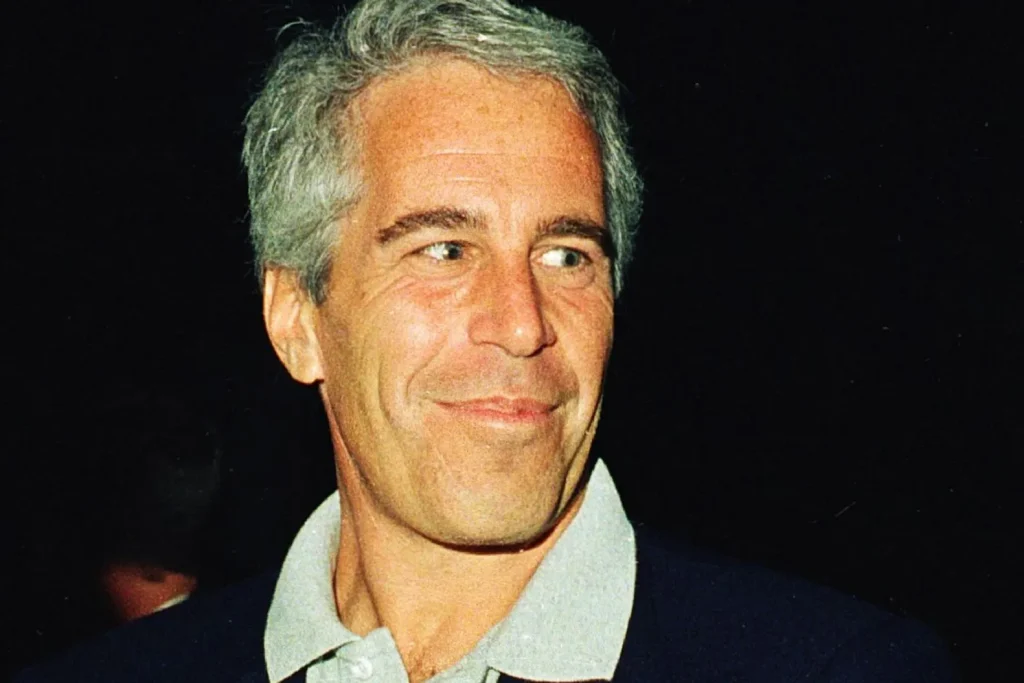
The astronomical wealth of Jeffrey Epstein and the strange dealings of his finances have been the source of wonder, speculation, and assumption over the last few decades. Epstein reached immense wealth and social status without a college degree or any publicly known business. He used to live in lavish mansions, spend time on private planes, and engage with millionaires, heads of state, and aristocrats.
However, one question is now still unanswered despite his death in 2019: How was Jeffrey Epstein able to make his money? This article gives a detailed account of Epstein’s business operations, his associations with people who ruled the business world, his financial connections, and the actual extent of his fortune.
Epstein’s Early Professional Life
Teaching Without Credentials
The career of Jeffrey Epstein can be said to have started uniquely. In the mid-1970s, he was employed as a physics and math teacher at the renowned Dalton School, located in Manhattan. He was neither a certified teacher nor did he have any degree, but his intelligence and eloquence enabled him to play in the field of the high-flying educational circles.
Epstein trained the children of high-profile families while at Dalton. During this time, he came across Alan “Ace” Greenberg, who was the chairman of Bear Stearns and who would later offer Epstein a job at the investment bank. This opportunity marked the first major step in his career.
Climbing the Ranks at Bear Stearns
Epstein started working at Bear Stearns as a junior assistant in 1976 and became a limited partner. He was a specialist in advising clients on sophisticated tax planning and international financial arrangements, which earned him the confidence of some of the richest clients of the firm. His tenure at Bear Stearns, however, ended promptly in 1981 after he abruptly left on vague grounds, possibly compliance-related. Nevertheless, Epstein left Bear Stearns with the experience, the contacts, and the confidence to start his own venture.
The Creation of J. Epstein & Co.
A Firm Shrouded in Secrecy
In 1982, Epstein established his financial management company, J. Epstein & Co., which was later known as Financial Trust Company. The stated objective of the firm was to handle the assets of ultra-high-net-worth persons, especially those with a net worth of a billion and above. He boasted of a very exclusive clientele and the expertise of tax minimization, offshore structures, and discretion regarding financial planning and wealth management. The company had been set up based in the U.S. Virgin Islands, where the government provided tax reduction benefits and ensured less government regulation. Such secrecy would be the signature of Epstein’s financial empire.
No Obvious Business Model
Among the most inexplicable properties of Epstein’s business was the lack of a well-known user-visible business model. There were no known financial statements, no public client list, and no clear investment products or services. The firm run by Epstein did not have visible sources of revenue, as in the case of traditional hedge funds or family offices. Most of the financial arena has started to wonder how somebody could become so wealthy with no significant portfolio, no history in an investment fund, and no corporate stock.
Leslie Wexner and the Key to Epstein’s Fortune
A Powerful Patron
Leslie Wexner, the billionaire founder of the L Brands company, which owns Victoria’s Secret and Bath & Body Works, among other massive retailers, was perhaps the most important person in Epstein’s financial life. In the mid-1980s, Epstein was introduced to Wexner, and by the 1990s, Wexner had given Epstein privileged access to his personal and business life. Wexner left Epstein in charge of hundreds of millions of dollars and allegedly granted him the power of attorney so Epstein could make financial decisions, hire and fire employees, or even buy real estate on his behalf.
The Manhattan Mansion
The transfer of an opulent mansion on East 71st Street in Manhattan was perhaps one of the most pronounced indications of how Epstein was linked to Wexner. The house, which was worth more than 70 million dollars, was previously owned by an entity controlled by Wexner and subsequently transferred to Epstein in dubious conditions. Later, Wexner alleged that he did not know how Epstein managed to gain complete ownership of the premises, casting doubts on the prospect of financial schemes.
Most financial observers are convinced that the wealth of Wexner was the root of the riches and standing of Epstein, which enabled the latter to establish his personal net worth as a trusted money manager of the upper crust.
Offshore Accounts and Financial Maneuvering
Tax Havens and Shell Companies
Epstein used offshore tax havens extensively. Locating his company in the U.S. Virgin Islands and forming it as a series of interconnected trusts and shell corporations, he reduced his tax payments to a minimum and hid where his real money came in. Available public records show that Epstein had a series of limited liability companies (LLCs) and trusts whose names have included such designations as “NES LLC,” “Maples Fiduciary Services,” and “Hyperion Air.” Such entities allowed them to buy aircraft, yachts, and real estate, as well as set up a corporate wall that rendered their financial dealings hard to monitor.
Complex and Unverifiable Assets
During his 2019 bail hearing, Epstein claimed to have a net worth exceeding $500 million. Court documents listed his assets, including:
- More than $56 million in cash
- $113 million in equities
- $195 million in hedge fund investments
- $178 million in real estate across multiple countries
Nonetheless, investigators could not confirm many of these assets. The reason that some analysts used is that the numbers were exaggerated or that the value of assets was pegged to virtual entities that lacked substantial liquidity. To put it in other words, the current net worth of Epstein could have had very little to do with the actual earnings but rather with the image of wealth.
Possible Sources of Undisclosed Income
Blackmail Allegations
One of the theories that was popular but never officially confirmed is that Epstein was practicing blackmail. Since he used to invite people with influential powers to his estates, some of which had surveillance gadgets, there are assumptions that he might have secured incriminating information about his guests.
Many of the victims and affiliate organizations accused Epstein of videotaping sex acts between his guests and underage girls. Such content could have given Epstein an enormous amount of blackmailing power, potentially explaining how he stayed influential and funded with no apparent business operations. Illegal Systems of Payments.
Illicit Financial Schemes
One of the theories is that Epstein used to engage in financial fraud, like Ponzi-like schemes, insider trading, or serving as an intermediary of illicit money flow. These assertions have not been confirmed, but the absence of a transparent income source has prompted huge numbers to believe that legal counseling and portfolio administration by themselves would not have made Epstein as vast as he was.
Ties to the Science and Tech Communities
Philanthropic Ventures
Epstein started donating his funds in the 2000s to prestigious academic institutions, including Harvard University and the Institute of Advanced Study. He established the Jeffrey Epstein VI Foundation, which purported to fund science, education, and global health projects. Such charitable activities allowed him to have access to top scientists, such as physicists, biologists, and artificial intelligence scientists.
But it now turns out that a lot of this philanthropy was part of social climbing and image laundering. Since then, some beneficiaries have returned donations or publicly disavowed him.
Links to Silicon Valley
Epstein was also a courtier in Silicon Valley. He gave dinner parties with the executives of technology, invested in start-ups, and professed to be interested in crypto-transhumanism and cryogenics. Although it was unclear whether he was a major investor in tech firms, these connections expanded his network and influence.
The Mystery of Epstein’s Net Worth
Net Worth Estimates Vary Widely
The net worth estimates of Epstein have varied from a total of 200 million dollars and above 1billion dollars. The discrepancy is because he has been secretive with his holdings, and the fact that he has restricted his full financial portfolio from being accessed by regulators and journalists.
A 2020 report by forensic accountants hired by the representatives of the Epstein estate recorded that he controlled hundreds of millions in assets, but found there was no steady source of income. This lends credence to the fact that Epstein might have exaggerated or even artificially boosted his wealth with elaborate transactions of assets and exaggerated valuations.
The Epstein Estate and Victim Compensation
Since his death, Epstein’s estate has faced legal challenges. In 2020, the Epstein Victims Compensation Program was established, and more than 150 people received over $121 million. The estate sold some of Epstein’s assets, such as property, cars, and shares, to finance the program. This brought more light to the true value of his property. Additionally, although the property was large, it was not as huge as Epstein claimed. This disclosure once again pointed to the fact that some of Epstein’s appearance was based on a myth that he was incredibly wealthy.
The Legacy of Financial Secrecy
A Symbol of Unaccountable Wealth
The fact that Jeffrey Epstein was able to amass and hide his wealth without any supervision speaks more to how global financial regulations are not being followed. Shell companies, tax havens, and philanthropy front groups helped him to maintain near-complete impunity.
His case has created demands for changes to the laws of wealth disclosure, banking transparency, and governance of offshore finance. Critics argue that Epstein wasn’t a unique case, but a reflection of a global system that lets the wealthy elite exploit their power.
Questions That Remain
Even years after his death, critical questions remain unanswered:
- Who were Epstein’s real financial backers?
- Did others benefit financially from his operations?
- Were his businesses fronts for more nefarious activities?
Until a full forensic accounting of his global assets is completed, the mystery surrounding Jeffrey Epstein’s fortune is likely to persist.
The Bottom Line
Jeffrey Epstein organized his financial existence out of invisibility, control, and influence. He did not have a college degree or any public investment successes, and did not have a business empire that people could see, yet he was able to present himself as a billionaire who was an expert on financial matters. Painted behind the illusion was an empty empire propped up on secrecy, influence, and maybe coercion.
