
What is Jeff Bezos’ Net Worth in 2025?
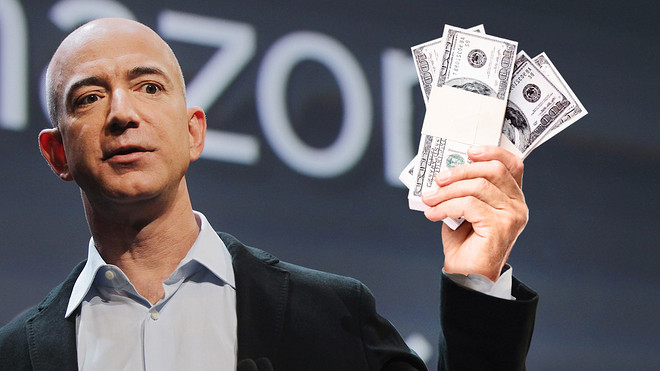
Jeff Bezos’ net worth today is proof that future-proofing your business is an effective way to achieve success
In 2001, people laughed at the idea of buying books online. The stock price sat at $10. Nobody saw what Bezos saw – a future where convenience trumped tradition. Today, watching that same stock hover around $180, it’s impossible not to wonder about the mind behind this wealth-creation machine. Bezos didn’t just build wealth; he reshaped how humans interact with commerce. Let’s dive into the numbers and stories behind one of history’s greatest wealth builders.
Money doesn’t buy happiness, but Bezos found both
Most billionaires chase zeroes. Bezos chased problems worth solving. Starting in his garage, he saw books as the start, not the end game. Each failure taught him something new. The countless nights of pizza deliveries and coding sessions built more than wealth – they built character.
When Amazon’s stock tanked in 2001, most shareholders jumped ship. Bezos kept building. While others watched their screens, he improved warehouse efficiency. The money followed the value creation, not the other way around.
His divorce could’ve broken him. Instead, it showed his resilience. MacKenzie got billions, yet Amazon barely flinched. True wealth transcends personal chaos.
The numbers game: breaking down Jeff Bezos’ net worth
Raw numbers bore me but patterns tell stories. Jeff Bezos’ net worth is well over $200 billion in 2025. This wealth breaks down unusually – 87% in Amazon shares, 7% in Blue Origin, 3% in real estate, and 3% in other investments.
The stock fluctuates daily. On some days he’s up $10 billion, on others his down $8 billion. Paper wealth moves like waves, but Bezos thinks in decades, not days.
His real estate portfolio spans continents. The $165 million Beverly Hills mansion makes headlines, but his $147 million Maui compound reveals his true priorities – privacy, family time, strategic thinking space.
Beyond the Amazon bubble
Smart money never sleeps in one bed. Bezos learned this early. While everyone watched Amazon, he quietly built his space empire through Blue Origin. When critics mocked his “midlife crisis,” he poured billions into climate tech.
The Washington Post purchase puzzled many. $250 million for a struggling newspaper? Bezos saw beyond the printing presses. He saw influence, digital transformation potential, and a chance to reshape media narratives.
His Bezos Earth Fund commitment hit $10 billion. Not for PR – he barely shares news about it. Each investment targets systemic problems: renewable energy, conservation tech, and climate science. Money amplifies vision when deployed strategically.
The Washington Post gambit
Nobody expected this move. A tech giant buying a newspaper in 2013? The industry bled money. Traditional media gasped for air. But Bezos thinks differently.
The Post wasn’t just dying paper. It was a symbol of trust – the hardest currency to earn in media. While others saw expenses, Bezos saw an opportunity. Digital transformation costs money, but trust takes decades to build.
Under his ownership, subscriptions tripled. The newsroom grew. Critics claimed he’d meddle – he didn’t. Instead, he gave them a runway to experiment, fail, and learn. This was the classic Bezos playbook: long-term thinking in a short-term world.
Real estate empire: more than just houses
Walk through Beverly Hills. Pass the $165 million Warner Estate. If all you see is luxury, you’ve missed the point. Bezos buys properties like he builds companies – with purpose.
His Manhattan apartments are a command center for East Coast operations. His Hawaiian compound is a think tank space away from tech bubbles. Each property serves strategic goals beyond its walls.
That $500 million yacht is a symbol of freedom to Bezos but critics accuse him of excesses. When you’re reshaping industries, privacy becomes oxygen. These aren’t expenses – they’re investments in freedom of movement, thought, and operation.
Blue Origin: not just a space fantasy
Stories about the space race are boring. The media loves Musk vs. Bezos stories. They miss the real play. Blue Origin isn’t about ego – it’s about infrastructure.
Every week, they launch, test, fail, and improve. This is not about hype, just progress. Bezos poured billions into the venture without flinching. While others launch cars into space, he’s building the foundation for the space economy.
The real money isn’t in tourism. It’s in satellites, manufacturing, and resources. Bezos understands this. He’s playing a 50-year game while others chase headlines. That’s why we watch Blue Origin more closely than SpaceX – it offers substance over spectacle.
Philanthropy: the Bezos Earth Fund moves mountains
Most billionaires play it safe with charity. Build a hospital wing, fund a scholarship, and get the plaque. Bezos took a different path.
Contributing $10 billion towards climate solutions sounds massive. In most people’s books, scale matters less than strategy. Jeff Bezos’ fund targets force multipliers – innovations that could trigger cascade effects. Think carbon capture breakthroughs, not solar panel installations.
Many skeptics called Jeff Bezos’ donation a PR move. The same people called Amazon a scam in ’97. Bezos ignored the noise. The fund operates quietly, backing scientists and engineers who might unlock planetary solutions. You don’t need press releases when you’re buying time for humanity.
The Day One Fund: fixing education from the ground up
Education talk bores most tech billionaires. They’d rather build Mars colonies. But Bezos saw the core issue – you can’t fix tomorrow without fixing today’s foundations.
His Day One Fund approach was surprising. Instead of dumping cash into existing systems, he built new models. Quality preschools in underserved areas. Direct support for homeless families. No middlemen, no bureaucracy.
The numbers tell the story. $2 billion committed. 42 nonprofits funded. Thousands of families helped. But raw numbers miss the point. He’s testing scalable solutions to generational problems. These are classic Amazon principles applied to social change.
Investment philosophy: follow the innovation
We study billionaire portfolios. Most follow patterns – index funds, blue chips, and real estate. These are all safe plays. Bezos invests as he builds – by finding leverage points and pushing hard.
His Altos Labs investment shocked biotech insiders. Aging research seemed fringe but longevity tech will reshape everything – healthcare, retirement, and social structures. Bezos saw this early.
He backed AI pioneers when neural nets seemed like sci-fi. Poured money into quantum computing before most knew what the word “quantum” even meant. His portfolio reads like a sci-fi novel, but every bet connects to future human needs. That’s the pattern – if you look close enough.
Personal indulgences: beyond price tags
Bezos’ $500 million yacht sparked outrage. The media missed the plot entirely.
Was it massive? Sure. Revolutionary? Absolutely. Its hydrogen propulsion system quietly tests tech that could transform shipping. Bezos turned luxury into R&D labs. Even his “toys” served multiple purposes.
Privacy comes at a premium when you’re worth billions. Yet he still grabs coffee at local Seattle spots. Flies commercial once in a while. Keeps his old Honda. Wealth changes everything and nothing.
The divorce factor
MacKenzie Scott got Amazon shares worth $38 billion. The markets barely reacted.
What’s fascinating about this is that they both kept building. She revolutionized philanthropy. He doubled down on innovation. Their wealth split created two force multipliers instead of destroying value.
Watch what they do, not what the tabloids say.
Security: the hidden costs
Ever wonder why Bezos often stands slightly left in photos? His security detail positions him that way. It’s a small detail with big implications.
The preservation machine around him runs 24/7. Cyber teams. Physical security. Secure compounds.
Running the empire
Bezos probably spends more on accounting than most people earn in a lifetime.
His empire needs hundreds of specialists. Tax experts. Investment analysts. Legal teams across continents. The machine behind the man costs millions every month. Time becomes his scarcest resource.
Most mornings start at at 10am. He sleeps eight hours. This is non-negotiable. Even empire builders need rest.
Betting on tomorrow
The growth of Jeff Bezos’ net worth and how he uses his wealth demonstrate an interesting pattern. While everyone watched his space venture, he quietly backed three groundbreaking fusion energy startups.
Climate tech. Longevity research. Space manufacturing. His money flows where humanity’s survival bottlenecks exist.s.
The obsession with time
Walk into Bezos’ office and the first thing you’ll notice is that there are no clocks. This is strange for someone who revolutionized same-day delivery.
Time moves differently at his level. While executives stress over quarterly reports, he plans decades ahead.
Jeff Bezos cares about doing things right, not fast.” That mindset built Amazon’s foundation and Jeff Bezos’ net worth. Most founders optimize for speed. Bezos optimizes for inevitability.
Digital shadow economics
Nobody talks about Bezos’s quiet tech investments. AWS generates headlines. The real story lies in his personal portfolio.
He backed Unity before the metaverse became a buzzword. Invested in AI chipmakers while others chased crypto. Saw technology waves before they formee.
Through Bezos Expeditions, he planted seeds in genomics, robotics, underground architecture. Each bet followed a pattern – find rate-limiting steps in human progress, and solve them systematically.
The knowledge network
Bezos runs an invisible university. Not the traditional kind.
Every month, he gathers minds from diverse fields. Physicists meet philosophers. Biologists debate architects.
These meetings shape his investment thesis. While others network for deals, he networks for insights.
Living laboratory
Jeff Bezos’ homes aren’t just properties. Each serves as a testing ground for future tech.
The Washington mansion runs on experimental power systems. The Hawaiian compound pilots new water recycling methods. Even his guest houses double as prototype spaces for sustainable living.
Most billionaires build showcases. Bezos builds proof-of-concept.
Crisis management machine
Covid-19 tested every billionaire’s adaptability. Watch how Bezos responded and you’ll find a fascinating case study.
Amazon’s infrastructure became society’s backbone. Blue Origin retooled for medical equipment production. Washington Post dropped the paywall on health coverage.
This crisis revealed his empire’s true architecture – interconnected systems designed for resilience. This was not an accident. It was pure design.
Cultural engineering
Study how Bezos shapes company cultures and you’ll identify a subtle art behind his decisions.
Amazon’s leadership principles? Everyone quotes them. Few notice how they rewire thinking patterns. Blue Origin’s methodical pace is by design, not default.
Even his charitable giving follows cultural engineering principles. It changes how entire sectors approach problems.
Most wealth measures ignore this – the power to shape how organizations think.
The legacy question
Space colonization infrastructure. Climate innovation. Press freedom. Educational experiments. These might matter more than Amazon someday.
Wealth lets you shape the future. Bezos shapes it aggressively. Watch what he builds next – it might give you a glimpse into humanity’s future.
